
The challenge.
Every ERP holds more procedure than its users can remember. How does a request become an order? Which screen records a receipt? Who approves payroll? Which tax table applies? The answers are in a manual, a training session or one experienced colleague. When that colleague is away, the work waits.
Finding that colleague takes real time. Research by the McKinsey Global Institute estimates that interaction workers spend nearly 20 percent of the working week on two tasks. They look for internal information, or they look for colleagues who can help.1
ERP makes the gap wider, because so much of the system is never learned. A study of ERP use in six organizations after installation found that much of the installed functionality goes unused.2 The key users others turn to are often chosen haphazardly and ill-prepared, and end users learn mostly by doing.3
The knowledge that does exist tends to leave. ERP settings are many, and each one affects others. So consultants and the vendor hold much of the knowledge about them.4 Project teams disband after go-live,5 and skilled staff who move on for pay or promotion take their experience of the system with them.6
The gap has a measurable price. One study compared two SAP rollouts of similar scope. The company that left the work to consultants needed at least 25 percent more external consulting, mostly support after go-live. Its users had not learned to run the system themselves.7 Another organization spent 12,480 hours of its own staff’s time maintaining its ERP over 20 months, the equivalent of USD 873,600 a year.8
Training cannot stop at go-live either. A 2023 review of the research ranks training after go-live second of thirteen success factors for the years that follow.9 The question for the AI era is whether the ERP can carry part of that teaching itself, and do it without misleading anyone.
The approach.
continON’s assistant does not browse the web or look into an organization’s records. It answers from a body of product knowledge CREA-KO wrote about continON’s own screens, steps and permissions, and from the conversation in front of it.
We read that knowledge for three working questions, then checked each point against the continON code behind the screens it names.
| Question | Application | What it covers |
|---|---|---|
| How does a supply request become stock in a warehouse? | Goods and Services | The purchase and warehouse screens, without a purchasing sequence that nobody gave it |
| How is monthly payroll generated and approved? | Human Resources | The prerequisites, the Payroll Generator steps and the separate rights to generate, execute and approve |
| How does a sale reach the books? | Goods and Services, Finance | The sales form and its sections, without claiming effects that saving does not guarantee |
What happened.
Each workflow below sets out what the assistant tells a user, then what the continON code does behind it.
Supply request to stock.
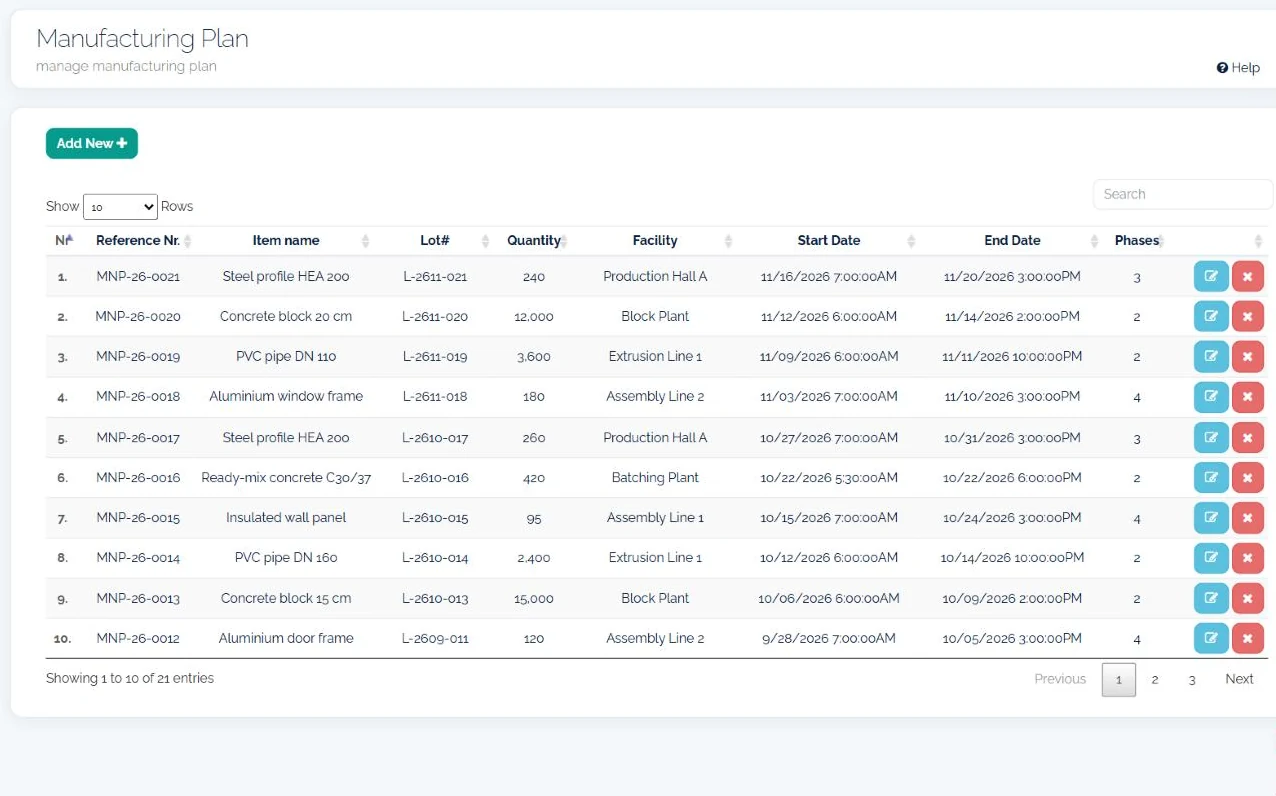
For purchasing, the assistant points to the Purchase screen and to the Stock and Supply screens of the warehouse. On the Purchase screen, a purchase can start from an order and holds its items, supply expenses and payments. Its knowledge says the exact supplier-selection sequence is not established, so it does not make one up.
The code fills in the rest.
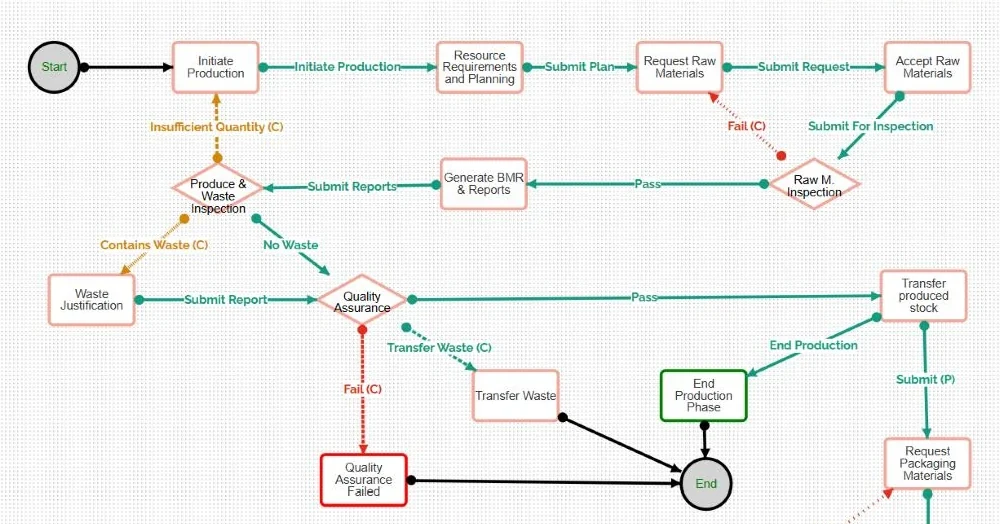
- Approving a supply request reserves the stock and releases the request’s lines.
- A buyer turns the released lines into a purchase order to a partner.
- The receipt goes on the purchase, with a link to its order.
- Saving the receipt adds the goods to the stock of the purchase’s warehouse.
Approval, ordering and receipt sit under different rights, so an organization can give them to different people. That is the separation of duties a purchasing control depends on.
Monthly payroll.
Payroll is where the assistant’s knowledge is most detailed. Before any step, it names the prerequisites. The user needs access to Human Resources and the read, generate and execute permissions of the Payroll Generator. The schemas, pay setup and payroll periods must also have a configuration. Then it gives the steps.
- Open Human Resources and find the Payroll Generator.
- Choose exempt or non-exempt employees, then select the payroll period or a custom period.
- Select the schema rows and generate the payroll.
- Review each employee’s gross income, contributions, adjusted gross income, tax and net income, and select the employees to include.
- Execute the payroll and confirm. Approval and payslips are separate steps.
The instructions of the assistant forbid any claim that payroll execution moves money to a bank account. They tell it to send a user without a permission to an administrator.
The code matches. Generating, executing, approving and producing payslips are four separate rights, and a payroll schema carries the country and state tax brackets the organization configures.
A sale into the books.
For a sale, the assistant opens the sales list and the Add New form. The form has reference, status and date, the buyer, the warehouse, currency and payment information, and the Sale Details, Payments and Return sections. Its instructions tell it not to assume stock movements, invoices or payment from a save alone.
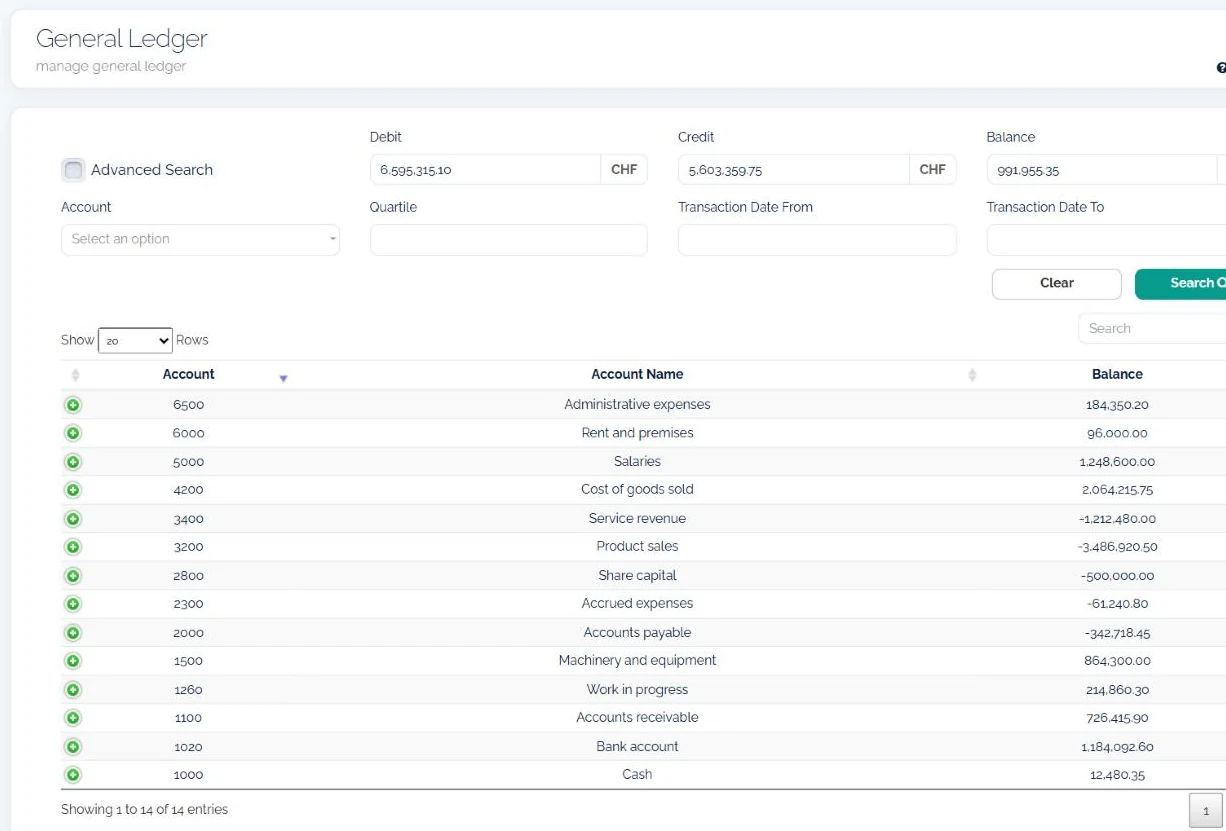
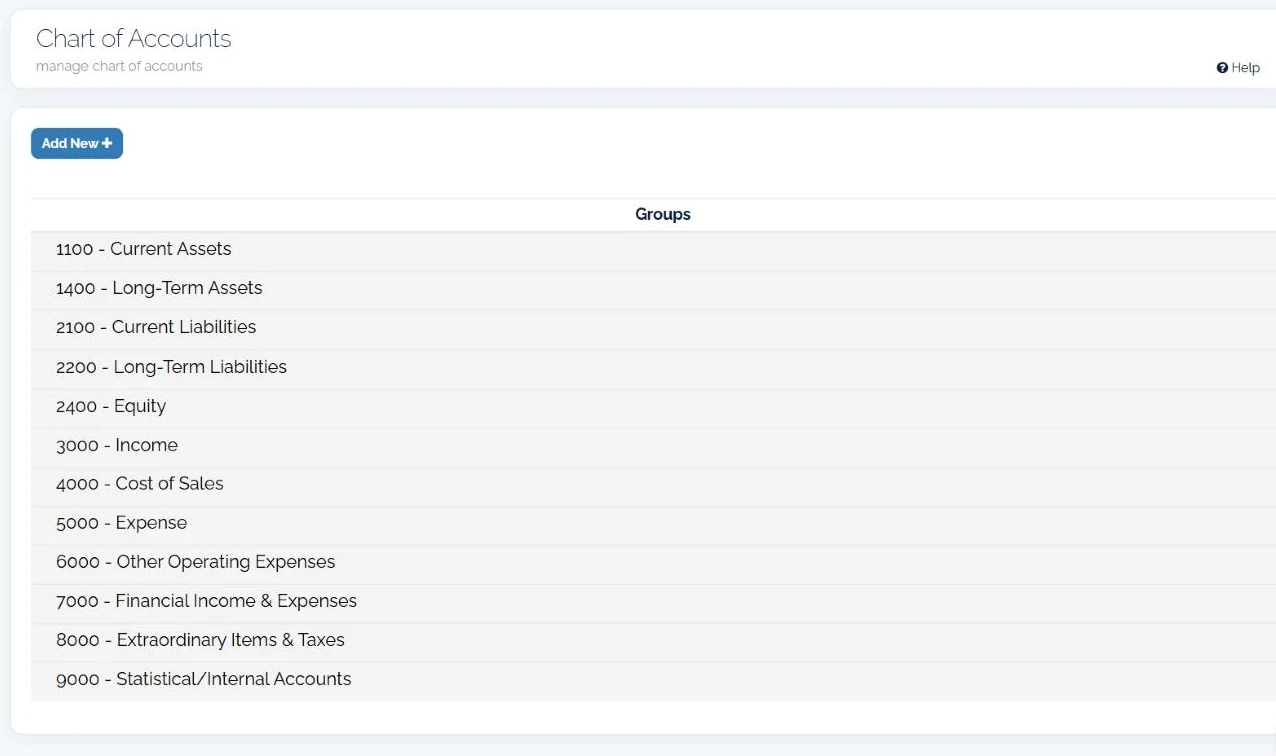
The code shows why that caution is right. When accounting is on for the sale type, a save of the sale lines writes a VAT line. A save of a payment writes the debit and credit lines to the accounts that the sale type names. What reaches the ledger depends on configuration the assistant cannot see.
The full chain, from the sale type to the financial reports, is traced in One sale, from order to statements.
The result.
Permissions come first.
Before the steps, the assistant names the rights a task needs, so a user without them knows to ask an administrator.
It explains, and never acts.
It has no tools and no access to records. Approving, receiving, executing payroll and saving a sale stay with a person who holds the right.
It stops where its knowledge stops.
Where a sequence is not established, or an effect is not guaranteed, it says so instead of inventing one.
Those three rules are what make an assistant safe to put in front of every user of an ERP. An answer that sounds right but invents a step is worse than no answer, because people act on it.
The limit is deliberate. The assistant does not see the organization’s data, so it cannot name this organization’s accounts, schemas or role holders. Its answers describe continON and point to the screens where the organization’s own settings live.
Why it matters.
The first wave of AI in business software summarized documents and drafted emails. The next sits inside the system of record. Gartner expects most enterprise applications to have an embedded assistant by the end of 2025. It describes assistants as tools that make work simpler but depend on human input.10
The evidence is strongest for people new to the work. The Quarterly Journal of Economics published a study of 5,172 customer-support agents. An AI assistant increased issues resolved per hour by 15 percent on average, and by 30 percent for less skilled and less experienced agents. Agents with two months on the job performed as well as agents with more than six months who worked without it.11
The same research marks the limit. In a preregistered experiment with 758 consultants, the consultants who used AI completed 12.2 percent more tasks. They finished 25.1 percent faster on work inside the capabilities of the AI. On a task chosen to fall outside them, they were 19 percent less likely to reach a correct answer.12
That is why grounding matters. An assistant that answers from specific, retrieved sources invents far less: in one peer-reviewed test, retrieval cut hallucinated responses by more than 60 percent.13 The continON assistant answers from knowledge about the continON screens. Its instructions tell it to say when a question is outside that knowledge.
It also widens who the system serves. Each user gets an answer about their screen when they need it. This includes a new employee on the first day, a manager who uses payroll twice a year and an auditor who traces a figure. Training is one of the three most-cited success factors across 185 studies of ERP projects,14 and in one case study it was the first budget cut, leaving many users and managers unaware of much of what the system could do.15
What stays with people.
The assistant explains. A person with the correct permission still does these actions: approve the request, record the receipt, execute the payroll and save the sale. continON keeps a change history of each create, edit and delete.
That is the design security guidance asks for. OWASP’s guidance for AI applications says an assistant should hold the minimum permissions necessary, and that high-impact actions need a person’s approval.16 continON’s assistant holds none at all. The NIST AI Risk Management Framework asks organizations to define roles and responsibilities for human oversight of AI systems.17 The European AI Act puts the same principle into law for high-risk systems. People must be able to oversee them and to ignore or override their output.18
Research on post-implementation performance puts a competent internal ERP team at the core of the support an ERP needs.19 That team holds the organization’s memory of how its system works and decides how it changes. An assistant can take the routine how-to questions off that team, so its time goes to the setup itself.
Lessons for ERP buyers.
Five questions separate an assistant you can put in front of every user from one that will mislead them.
- Does it say where its answers come from, and what it cannot see?
- Does it name the permission each step needs?
- Does it name real screens and controls, or describe a generic ERP?
- Does it say plainly when something is outside what it knows?
- Can it change data, and if it can, under whose rights?
Notes
- Chui, Manyika, Bughin, Dobbs, Roxburgh, Sarrazin, Sands and Westergren (2012). The social economy: unlocking value and productivity through social technologies. McKinsey Global Institute. Read the source
- Jones, Zmud and Clark (2008). ERP in practice: a snapshot of post-installation perception and behaviors. Communications of the Association for Information Systems 23, article 25. Read the source
- Rutz, Kotthaus, Pinatti de Carvalho, Randall and Pipek (2023). The relevance of KES-oriented processes for the implementation of ERP systems: findings from an empirical study in German SMEs. Proceedings of the ACM on Human-Computer Interaction 7(CSCW2). Read the source
- Leyh. Tailoring of ERP systems. In Readings on Enterprise Resource Planning, chapter 6, pp. 74–83. Cited: p. 77.
- Ha and Ahn (2014). Factors affecting the performance of ERP systems in the post-implementation stage. Behaviour & Information Technology 33(10): 1065–1081. Cited: p. 1069.
- Ha and Ahn (2014). Factors affecting the performance of ERP systems in the post-implementation stage. Behaviour & Information Technology 33(10): 1065–1081. Cited: p. 1078.
- Lech (2011). Knowledge transfer procedures from consultants to users in ERP implementations. Electronic Journal of Knowledge Management 9(4): 318–327. Cited: p. 326. Read the source
- Ng and Gable (2010). Maintaining ERP packaged software: a revelatory case study. Journal of Information Technology 25(1): 65–90. Cited: accepted manuscript, p. 3. Read the source
- Butarbutar, Handayani, Suryono and Wibowo (2023). Systematic literature review of critical success factors on enterprise resource planning post implementation. Cogent Business & Management 10(3): 2264001. Cited: p. 13. Read the source
- Gartner (2025). Gartner predicts 40% of enterprise apps will feature task-specific AI agents by 2026, up from less than 5% in 2025. Press release, 26 August 2025. Read the source
- Brynjolfsson, Li and Raymond (2025). Generative AI at work. The Quarterly Journal of Economics 140(2): 889–942. Read the source
- Dell’Acqua, McFowland, Mollick, Lifshitz-Assaf, Kellogg, Rajendran, Krayer, Candelon and Lakhani (2023). Navigating the jagged technological frontier: field experimental evidence of the effects of AI on knowledge worker productivity and quality. Harvard Business School Working Paper 24-013. Read the source
- Shuster, Poff, Chen, Kiela and Weston (2021). Retrieval augmentation reduces hallucination in conversation. Findings of the Association for Computational Linguistics: EMNLP 2021, 3784–3803. Read the source
- Leyh (2011). Critical success factors for ERP system implementation projects: a literature review. Technische Universität Dresden. Read the source
- Kouki, Pellerin and Poulin (2007). Going beyond ERP implementation: an ERP assimilation cross-case analysis. CIRRELT working paper 2007-59. Cited: p. 10.
- OWASP GenAI Security Project (2025). LLM06:2025 Excessive Agency. OWASP Top 10 for LLM Applications. Read the source
- National Institute of Standards and Technology (2023). Artificial Intelligence Risk Management Framework (AI RMF 1.0). NIST AI 100-1. Cited: GOVERN 3.2, p. 23. Read the source
- Regulation (EU) 2024/1689 of the European Parliament and of the Council laying down harmonised rules on artificial intelligence (Artificial Intelligence Act). Official Journal of the European Union, 12 July 2024. Cited: Article 14. Read the source
- Ha and Ahn (2014). Factors affecting the performance of ERP systems in the post-implementation stage. Behaviour & Information Technology 33(10): 1065–1081. Cited: p. 1076.